Altcoin Wallet Safety: A Guide to Read-Only Tracking
Separate viewing, connections, signatures, and approvals while protecting recovery secrets and financial privacy.
Read the field noteField Notes category
2 complementary guides for understanding portfolio & wallets without losing sight of assumptions or uncertainty.
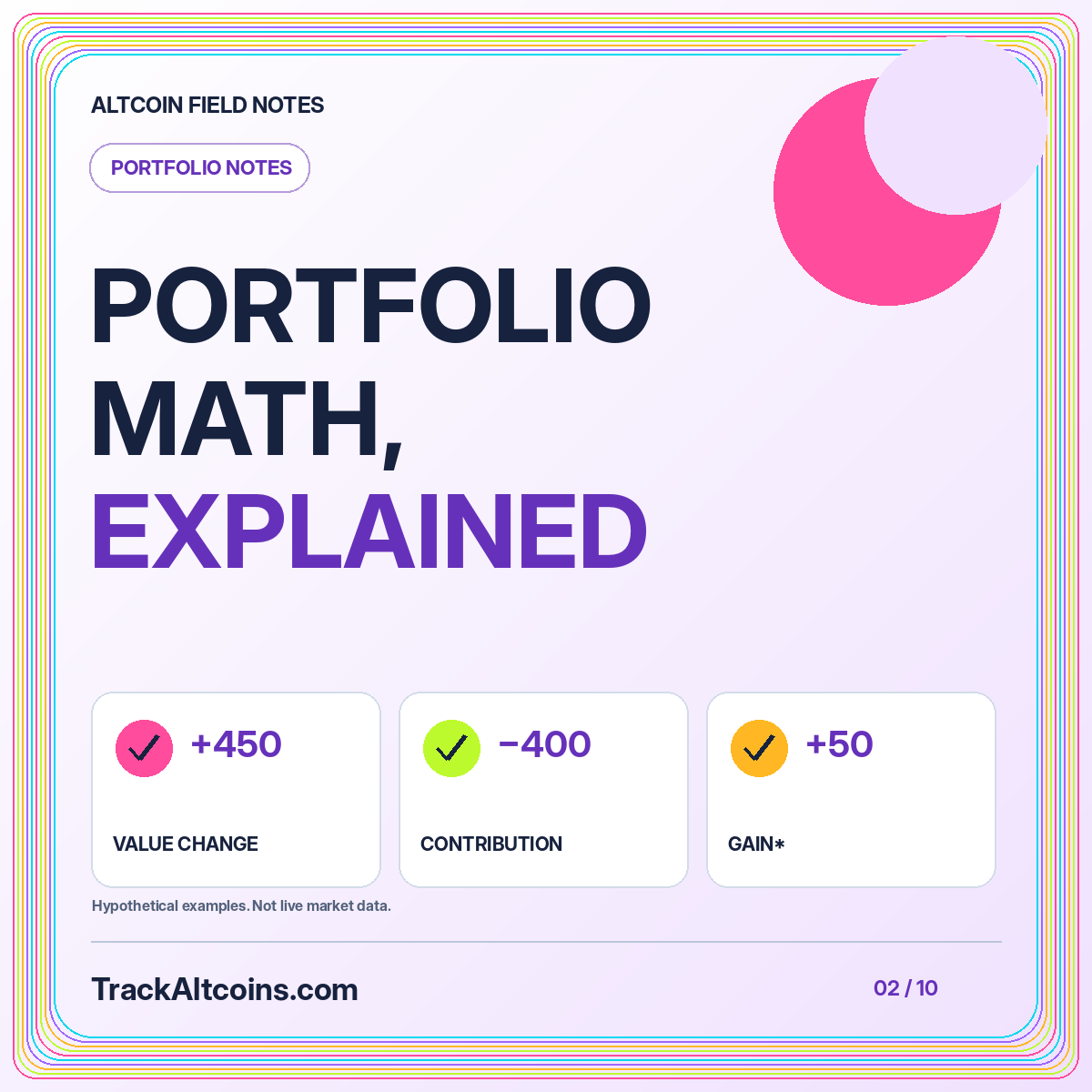
Portfolio records and wallet permissions are related, but they solve different problems. The portfolio guide explains ownership boundaries, quantity reconciliation, internal transfers, deposits, and performance calculations. The wallet guide examines what a tool can read or authorize and the privacy implications of connecting information. Start by deciding whether your task is accounting, research, or a transaction. That distinction makes it easier to evaluate whether an integration is necessary and which data belongs in a private record. A convenient total is only useful when you can explain its inputs.
Use these guides together when designing a repeatable personal workflow. Reconcile units before applying a reference price, and keep credentials out of research notes. An exported balance is not a complete transaction history; a public address is not an account password, but associating addresses can still expose information. These articles explain boundaries rather than recommending a particular wallet product. TrackAltcoins.com does not connect to wallets, synchronize holdings, or calculate personal returns. The interactive portfolio scenarios elsewhere on the site use fictional units to illustrate accounting differences without requiring your data.
The reading list
Separate viewing, connections, signatures, and approvals while protecting recovery secrets and financial privacy.
Read the field noteSeparate deposits, internal transfers, fees, and investment returns when organizing cryptocurrency portfolio records.
Read the field note