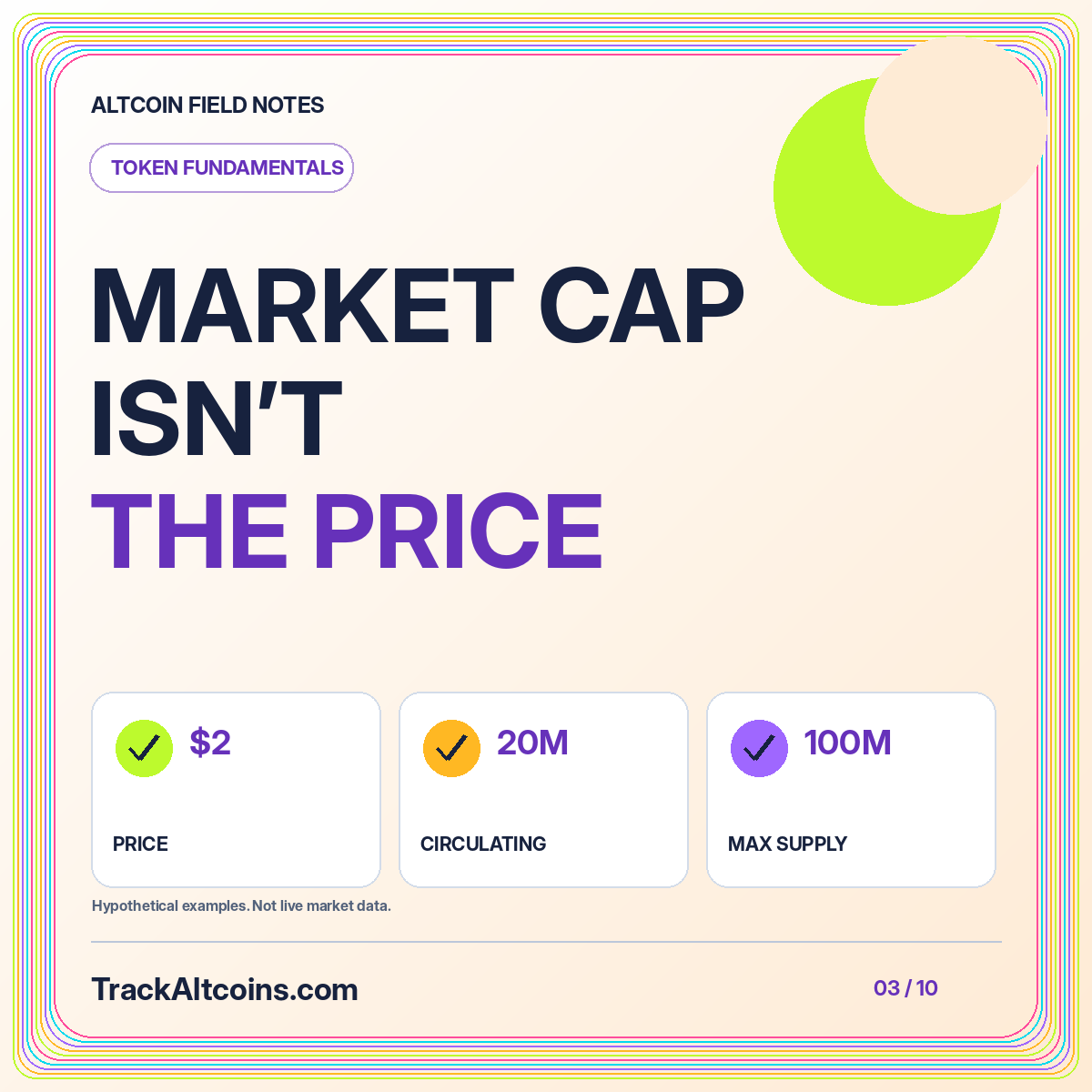
Market Cap vs. Fully Diluted Valuation: Read the Supply
Understand market capitalization, circulating supply, and fully diluted valuation with practical examples.
Read the field noteFollow the research theme
Follow this theme across 4 field notes, then use the related resources to investigate the details.
Market data becomes useful when its definition travels with it. This archive connects reference pricing, supply calculations, liquidity, timestamps, and the design of API records. A price without an asset identifier can refer to the wrong token. A supply figure without a denominator can confuse circulating market capitalization with a broader valuation. A freshly loaded page can show an old observation. The guides below address those distinctions through explicit examples rather than displaying an unlabeled dashboard of numbers.
Start with the beginner’s tracking guide for the reader-facing questions, then use the API guide for the implementation details. The valuation and liquidity articles explain why a computed market value and an executable trade are different concepts. Keep quote currency, source, time window, and observation time together in any comparison. Treat unavailable information as a state requiring explanation instead of substituting zero. TrackAltcoins.com offers a static token-reference dataset to illustrate a clear data contract; it does not distribute current prices, supply snapshots, or a live altcoin market ranking.
The reading list
Understand market capitalization, circulating supply, and fully diluted valuation with practical examples.
Read the field noteLearn why reference prices differ from execution outcomes and how liquidity, price impact, slippage, and fees fit together.
Read the field noteDesign reliable cryptocurrency data workflows with stable identifiers, timestamps, precision, and missing-data states.
Read the field noteBuild an altcoin research workflow with verified identities, useful measurements, timestamps, and an organized watchlist.
Read the field note